
Is Arizona the Right Move for Your Retirement?
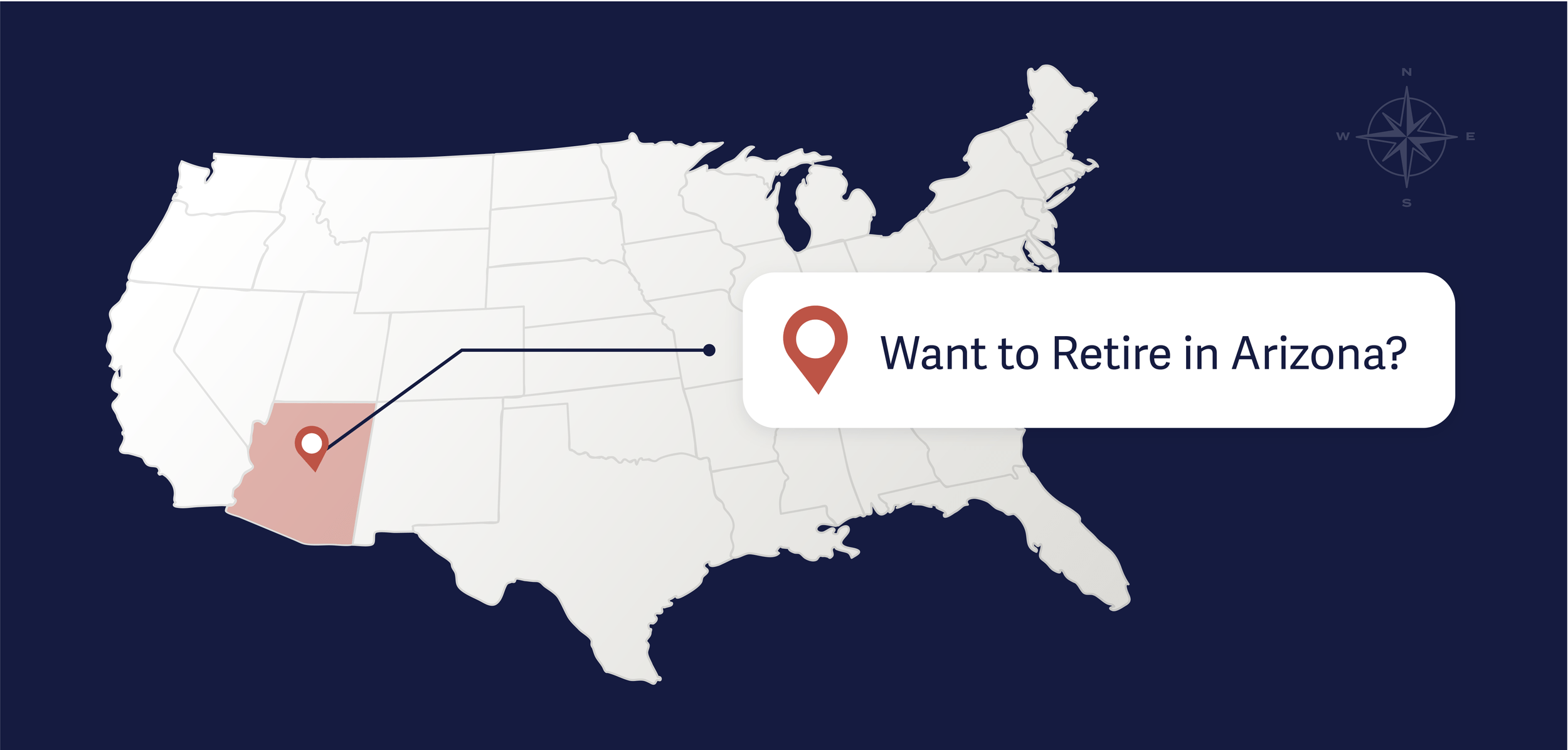
Choosing a retirement destination is rarely just about finding a warmer zip code; it’s about finding a place where your hard-earned savings can work just as hard as you did to achieve it. Many of our northern NJ clients find themselves at a crossroads between age 50 and 65, weighing the familiarity of the Garden State against the allure of the Grand Canyon State. It’s completely normal to feel a bit overwhelmed when considering a move 2,400 miles out west, but the good news is that Arizona continues to refine its tax and lifestyle offerings to remain a top-tier choice for retirees.
Over the most recent year of data, Arizona ranks as the third-most popular retirement destination in the country, trailing only Florida and North Carolina. Whether you’re drawn to the red rocks of Sedona or the bustling senior communities of Sun City, understanding the specific financial and lifestyle trade-offs is vital for your long-term confidence.
Moving west isn't just about escaping the humidity; it's about strategically positioning your wealth for the next thirty years — the same groundwork our retirement planning guide is built to help you lay.
Key Takeaways
- Popular destination: Arizona is the #3 retirement destination in the U.S. (based on the most recent year of data) — behind Florida and North Carolina — with 1.4M+ residents age 65+, over 19% of the state population.
- Low income tax: AZ has a flat 2.50% state income tax — lowest of the top retirement states after FL — plus no tax on Social Security, inheritance, or estate; 401(k) and IRA withdrawals are still taxed.
- Housing costs: Median home value is $421,381 (priciest of the top 4 retirement states) — but property tax averages just $1,879/year.
- Senior tax freeze: Residents 65+ meeting income and residency limits can lock in their home's tax valuation for 3-year periods (renewable) via the Senior Property Valuation Protection (SPVP) program.
- Watch the downsides: AZ is the 5th-most wildfire-prone state, sales tax is 11th-highest at 8.52%, in-home healthcare is pricier than average, and healthcare rankings are mixed (U.S. News).
Arizona Retirement: By the Numbers
1.4M+
AZ residents age 65+
(19% of state population)
#3
Retirement destination in the U.S. (behind FL and NC)
2.50%
Flat state income tax — lowest of the major retirement states (after FL’s $0)
$421,381
Median home value — highest of the four most popular retirement states
$1,879
Average annual property tax bill (~14th-lowest in the U.S. by dollars paid)
$3,415
Average homeowners insurance
(vs. a $2,490 national average)
The 4 most popular retirement states, compared
| Florida | Arizona | North Carolina | South Carolina | |
|---|---|---|---|---|
| Tax on 401(k)/IRA/pension income | None | 2.50% flat | 3.99% flat→ 3.49% in 2027 | 1.99% / 5.21%two-tier |
| Social Security taxed? | No | No | No | No |
| Estate or inheritance tax? | No | No | No | No |
| Median home value | $378,167 | $421,381 | $338,359 | $307,777 |
| Avg. annual property tax | $2,730 | $1,879 | $1,896 | $1,251 |
| Avg. homeowners insurance | $2,845 | $3,415 | $3,205 | $3,205 |
| Share of the four-state retiree inflow (3-yr) | 54% | 18.6% | 13.7% | 13.7% |
| U.S. News Medicare-quality rank | 8th | 39th | 13th | 24th |
Sources: median home values via Zillow; property taxes via WalletHub; homeowners insurance via NerdWallet; retiree inflow via SmartAsset (3-year share of the four states' net 60+ migration); Medicare-quality rank via U.S. News & World Report. For reference, New Jersey's average property tax bill is $9,590 and its median home value is $584,072; the U.S. median home value is $371,774 and the national average homeowners premium is $2,490. North Carolina's flat rate is scheduled to fall to 3.49% in 2027; South Carolina's 1.99% rate applies to the first $30,000 of taxable income, with 5.21% above.
Top reasons to retire in Arizona
Balmy weather and some really impressive views (the Grand Canyon, Sedona, and Hoover Dam immediately come to mind) are just a few reasons to retire in Arizona. Here are several others:
Other retirees are doing it
Retiring in a community of peers provides a sense of belonging that is hard to quantify, and the data shows that you certainly wouldn't be alone in making the move. That third-place national ranking reflects the single most recent year; widen the lens to three years, and Arizona edges up to second. We analyzed three years of SmartAsset migration data (the most recent study available, covering government data through 2023) to understand just how popular Arizona has become.
Across that three-year window, a total of 370,055 net migrations of retiree households (people aged 60+) occurred within the four most popular retiree destinations: Florida, Arizona, North Carolina, and South Carolina. About 54% of those within this group ultimately ended up in Florida, while Arizona—the second-most popular destination in this case—saw a positive net migration of 68,808 retirees (18.6%).
The tax landscape is flat, predictable, and friendly
The primary reason many pre-retirees look to Arizona is its simplified, low-tax environment. While Florida offers zero state income tax, Arizona utilizes a highly competitive flat-tax model that significantly undercuts the graduated rates found in the Northeast. As of April 2026, Arizona’s flat income tax rate is 2.50%: among the lowest in the nation for states that levy an income tax, providing a high degree of predictability for long-term cash flow. The state also offers several specific exemptions that can lower your effective bill including…
Untaxed Social Security
Arizona doesn’t tax Social Security benefits, keeping those core payments entirely in your pocket.
A military retirement exemption
Arizona’s full exemption of military retirement pay makes it an exceptionally friendly choice for veterans.
No estate or inheritance tax
Leaving a legacy is a priority for many Vision Retirement families; Arizona, likewise, won’t take a second cut of your wealth when it passes to heirs.
Low long-term capital gains
As of January 2026, Arizona taxpayers can deduct 25% of total net long-term capital gains (resulting in an effective long-term capital gains tax rate of 1.875%).
Residency is the key that unlocks it all
One important caveat: these Arizona tax advantages only apply once you're genuinely an Arizona resident — and that means doing more than buying a home out west. Establishing Arizona residency generally means making it your primary home and shifting the markers of your life there — driver's license, voter registration, vehicle registration, where you spend the majority of the year, and where your key documents point.
Getting this transition right is what turns Arizona's low-tax promise into actual savings, so it's worth mapping out before you move rather than after. Our guides on minimizing retirement income taxes and tax-efficient withdrawal strategies can help you plan the move deliberately.
Home prices sit above the national average — but well below the Northeast
Comparing home prices in Ridgewood, NJ with those of an AZ town (e.g., Scottsdale or Tucson) is an eye-opening experience. While Arizona’s median home value sits at ~$421,381 in 2026 (per Zillow) and is about $50,000 higher than the national average, it remains comfortably below median values in northern NJ where homes in areas like Ridgewood often exceed $900,000. You can therefore potentially unlock hundreds of thousands of dollars in home equity simply by relocating.
Property taxes are low
Arizonans also have one of the lowest real-estate property tax rates compared to other U.S. states. Per Wallethub.com, only three states tax at a lower rate: Hawaii, Alabama, and Nevada. Even though Arizona home values run higher than its neighbors', that low rate still keeps the bill modest — about $1,879 a year on the median home. Compare that to New Jersey with the worst homeowner tax obligations (averaging $9,590), and you can see why Arizona is so appealing in this regard. The state also offers property tax relief programs for seniors, including the Senior Property Valuation Protection Option program (SPVP) that freezes the property valuation of residential homeowners aged 65+ who meet specific criteria (e.g., income limits and primary residency) for a 3-year period with renewals available thereafter.
You’ll have a solid peer group
Arizona is home to over 1.4 million people age 65+, comprising over 19% of the state’s population (per U.S. Census Bureau (ACS) data compiled by Consumer Affairs). One large benefit of this? Additional opportunities to socialize, making the post-work transition easier and linked to higher levels of happiness and longevity.
Top reasons to consider retiring outside of Arizona
As with all other retirement destinations, Arizona does have some drawbacks including:
Mixed Medicare and healthcare quality rankings
Arizona's healthcare picture is genuinely mixed. On one hand, the state is home to world-class institutions—most notably the Mayo Clinic, with a major footprint in Phoenix and Scottsdale and drawing patients nationwide. Mayo Clinic Hospital in Phoenix carries CMS's top 5-star Overall Hospital Rating — Medicare's highest tier (Medicare Care Compare). On the other hand, statewide quality measures are only average to below-average, with Arizona placing 21st for overall health care and 39th for elder/Medicare care in 2026 U.S. News & World Report rankings (known to shift from year to year).
Expensive in-home healthcare services
Should you find yourself needing to self-fund long-term care, Arizona is more expensive than the national average of $6,673 with monthly home health aide costs ringing in at ~$7,245: making early long-term care planning a vital part of your overall financial strategy.
Home and auto insurance rates are higher than the national average
Homeowners insurance in Arizona averages $3,415 per year, based on $400,000 dwelling coverage, $300,000 of liability coverage, and a $1,000 deductible, compared to the national average of $2,490. Auto insurance also runs well above the national average, with average full-coverage premiums running ~$2,947 annually compared to the U.S. average of $2,344.
Daily cost of living/sales tax
Understanding daily cash flow means considering what happens at the register. According to the Tax Foundation’s 2026 report, Arizona’s average combined state and local sales tax rate is 8.52%—making it the 11th most expensive state in the U.S. for sales tax. When it comes to the grocery bill, Arizona does provide a significant break here (with groceries exempt from state sales tax), but keep in mind individual cities and counties can still apply their own local taxes to food that often range from 2% to 4%. Prescription medications are also exempt from state sales tax, a vital cost-saver as you plan for future healthcare needs.
Arthritis and respiratory considerations
Arizona’s dry, warm climate is often appreciated by arthritis sufferers as the lack of cold, wet weather can provide significant relief. Those with respiratory issues should know, however, that Phoenix-Mesa consistently ranks among the most polluted cities for air quality. Furthermore, dust storms (haboobs) are a reality in the Phoenix-Tucson corridor—a challenge for those with severe asthma or allergies.
More prevalent consumer fraud
Economic vigilance is necessary when moving to a high-growth state like AZ. Recent Federal Trade Commission data ranked Arizona 11th for consumer fraud, with identity theft and credit card fraud coming through as the most common reported issues. With this in mind, we often recommend new residents utilize credit freezes and two-factor authentication for all financial accounts before unpacking their first box.
Environmental risks: wildfires and critters
Living in the Southwest means adjusting to a different set of environmental factors. Arizona ranks among the top five most wildfire-prone states—particularly during the dry summer months—and the desert landscape means you’ll likely need to budget for specialized pest control to manage native "critters" common across the state (e.g., scorpions and termites).
Best places to retire in Arizona: 2026 rankings
Looking for the best spot to land in? Look no further than Scottsdale, Mesa, Tempe, Tucson, and Phoenix: often pegged as the best cities in the state. Drilling down even further, SmartAsset’s top retirement communities include:
Sun City West: Claiming the #1 spot, this retirement community boasts a high percentage of seniors (over 82%) and often ranks as one of the top places to retire nationwide.
Green Valley: Located an hour north of the Mexican border and half hour away from Tucson, the #2-ranked town has over 75% seniors and many cultural/entertainment options.
Sun City: Taking the #3 spot, this active-adult retirement community located near Phoenix offers a peer-dense environment comprised of ~75% seniors.
Watch out
Wildfire risk is Arizona’s answer to Florida’s hurricane problem
Most people moving to Arizona for retirement don’t fully appreciate the wildfire exposure baked into the state’s climate. It’s a financial and safety risk worth planning for:
- Arizona ranks 5th-most wildfire-prone state in the country, behind only California, Colorado, Oregon, and Texas.
- Hot, dry summers and minimal rainfall make most Arizona homes at some level of wildfire risk — particularly in foothills, forested areas, and the urban-wildland interface.
- Insurance implications can be significant: some carriers have begun restricting coverage in high-risk Arizona ZIP codes (similar to the trend in California).
- Wildfire smoke can also impact air quality for weeks at a time — a concern for retirees with asthma, COPD, or other respiratory conditions.
What you can do:
- Check the wildfire risk for your specific area before buying — resources like the Arizona State Forestry Division and Wildfire Risk to Communities can help map it out.
- Confirm wildfire coverage with your insurer in writing — especially if you’re moving to a higher-risk area. Don’t assume it’s included.
- Budget for defensible-space landscaping — clearing brush, hardscaping near the home, and ember-resistant vents can meaningfully reduce risk and may earn you insurance discounts.
- Consider air filtration for your home — a HEPA filtration system pays off during fire season for respiratory health.
In sum
Arizona is a great place to consider for your retirement relocation. Prior to making any decisions, however, we recommend spending at least a few weeks in the Grand Canyon State (or any other location of your choosing!) before ultimately deciding where to spend your golden years.
Want to know if you're looking good financially for retirement? Enlist the help of our "Am I on Track?" service to gain insights into how likely you are to reach your retirement goals and (if applicable) actionable steps to get you back on course.
Reviewed for accuracy
Paul Muller, AEP®, CFP®
Founder and Relationship Manager at Vision Retirement, with 30+ years in the financial industry.
Read full bio →FAQs
-
Social Security benefits are completely exempt from state income tax in Arizona, a policy ensuring core retirement benefits remain untouched by the state.
-
Yes! The Senior Property Valuation Protection Option allows residents aged 65+ who meet specific income requirements to freeze the assessed value of their primary residence for a three-year period, protecting them from tax increases driven by rising home values.
-
Arizona does not have an inheritance or estate tax, making the state an attractive location for those wanting to maximize wealth passed down to heirs.
-
Arizona uses a flat tax rate of 2.5% (whereas New Jersey has a graduated tax rate reaching as high as 10.75%), resulting in a substantially lower state tax burden for most retirees with significant retirement income.



Disclosures:
This document is a summary only and is not intended to provide specific advice or recommendations for any individual or business.