


Social Security & Medicare Resources
Explore articles, tools, and videos designed to help you make confident decisions about Medicare and Social Security benefits.

Social Security & Medicare Basics: Start Here
New to Social Security and Medicare, or just want the fundamentals straight? Start here. These are the cornerstone guides — how each program works, when to claim, what Medicare does and doesn't cover, and the choices that shape your costs for life.
Featured Content
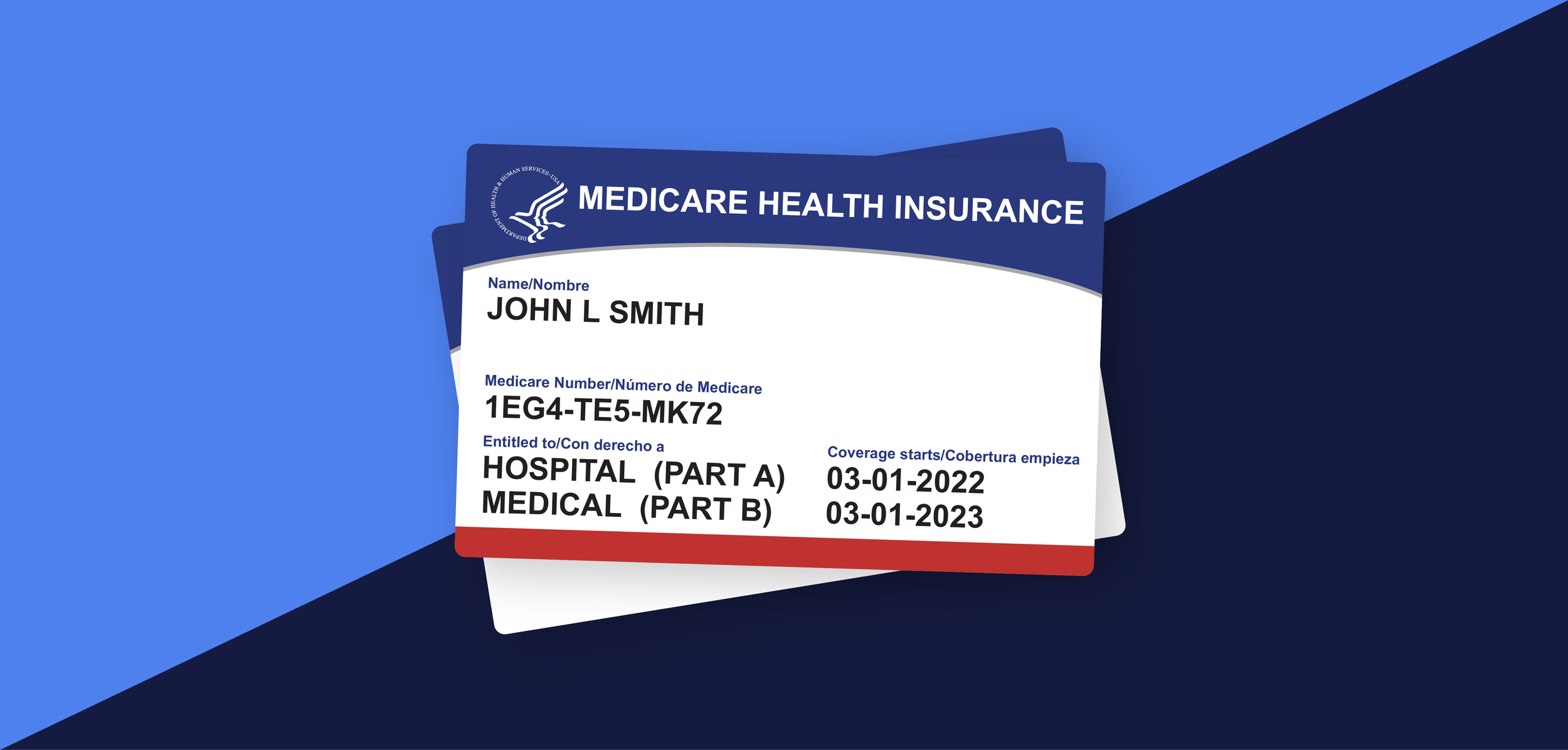
Medicare Explained: Eligibility, Benefits, Costs, and More!
Since most Medicare recipients wish they better understood the program, we’re happy to cover the basics here including eligibility, benefits, costs, and more!
Article
Medigap Explained: Coverage, Benefits, and How It Works
While retirees often encounter many surprises, one of the most common is looming Medicare coverage gaps. Thankfully, Medigap plans are there to help.
Article
What are Medicare Advantage Plans and How Do they Work?
Over 34 million (or 54%) Medicare beneficiaries are enrolled in a Medicare Advantage plan. Find out if these plans are right for you.
Article
How to Maximize Your Social Security Benefits
In this post, we’ll outline various approaches on how to maximize your Social Security benefits so you can enjoy retirement to the fullest.
Article
Meet IRMAA:
The Medicare surcharge that catches retirees by surprise
IRMAA — the "income-related monthly adjustment amount" — is a surcharge added to your Medicare Part B and Part D premiums once your income crosses certain thresholds. It can quietly add hundreds, even thousands, of dollars a year — and most people never see it coming.

The 2-Year "IRMAA Look-Back" Trap
Your premiums are set by your tax return from two years earlier — your income at 63 drives your surcharge at 65. That's the trap: a one-time spike two years ago (a Roth conversion, a home sale, a big capital gain) can inflate today's premiums, even if your income has since fallen.

Retiring Before 65? Mind the "Medicare Bridge"
If you retire before 65, you'll hit a gap — your employer coverage ends, but Medicare hasn't started yet. Bridging those years on your own can run a couple $15,000–$25,000 a year, making it one of early retirement's biggest and least-expected expenses.
Your subsidy depends on where the money comes from
Here's the lever most people miss: ACA subsidies are based on your taxable income, so drawing from a Roth or brokerage account instead of a traditional IRA can keep your reportable income low and unlock thousands in savings. In our example, a New Jersey couple trimmed their three-year healthcare cost from $79,200 to $14,400 — same spending, just a smarter withdrawal mix.
Working While on Social Security? Mind the Earnings Test

Yes — you can collect Social Security while you keep working. But before full retirement age, earning above the annual limit triggers the "earnings test," which temporarily holds back part of your check. The upside: it's not gone — you get it back once you reach full retirement age.
How the earnings test actually works
Before full retirement age, Social Security withholds $1 in benefits for every $2 you earn above an annual limit — and the limit rises, with gentler $1-for-every-$3 withholding, in the year you reach full retirement age.
Medicare Advantage vs. Medigap. Which Is Right for You?
Original Medicare leaves real gaps — deductibles, copays, and services like vision, dental, and hearing. Medicare Advantage and Medigap are the two ways to fill them, and they take very different approaches. Here's how to tell which one fits.

You can only pick one — and switching back is tricky.
It's Medigap or Medicare Advantage, not both. And the choice is stickier than it looks: you can switch during enrollment periods, but moving from Advantage back to a Medigap plan later often triggers medical underwriting — insurers can charge you more, or deny you, for pre-existing conditions. That's why the first decision deserves real thought.
Social Security Articles
For many retirees, Social Security is the foundation of their income — 39% of men and 44% of women over 65 rely on it for at least half of theirs. That makes the biggest question — when to claim — one of the most consequential decisions you'll make. These guides help you get it right.




Medicare Articles
Medicare is famously confusing — in a recent Harris Poll, more than 7 in 10 people over 50 said they wish they understood it better. And the stakes are high: miss an enrollment window or pick the wrong plan and you can pay for it for life. These guides break down the parts, the deadlines, and the choices that matter most.






Popular Questions
Find answers to common questions people ask us about Social Security and Medicare.
-
Your full retirement age (FRA) is the age when you can begin receiving full, unreduced Social Security benefits. If you were born in 1960 or later, your full retirement age is currently 67.
While claiming benefits before reaching your FRA permanently reduces your monthly payments, delaying them until after this milestone gives you a larger monthly benefit until age 70 (when Social Security benefits stop increasing).
-
When you decide to collect your monthly Social Security benefits, you must apply with the SSA either online, in-person, or over the phone by calling 1-800-772-1213.
-
While Social Security benefits are taxable, how much you’ll pay ultimately depends on your income from other taxable sources as well as where you live.
At the federal level, two primary factors determine if your Social Security benefits are taxable: your marital status and your annual combined income.
At the state level, currently eight states tax Social Security benefits to varying degrees: Colorado, Connecticut, Minnesota, Montana, New Mexico, Rhode Island, Utah, and Vermont.
-
You can only join, change, or drop a Medicare Advantage plan during specific enrollment periods:
1. Initial Enrollment Period: This 7-month window starts 3 months before the month you turn 65 and ends 3 months after.
2. Medicare Open Enrollment Period: Every year from October 15 to December 7.
3. Medicare Advantage Open Enrollment Period: From January 1 to March 31 each year. During this time, you can switch to another Medicare Advantage plan or drop your plan and return to Original Medicare.
Typically, you must keep your Medicare Advantage Plan for the full calendar year starting on the date your coverage begins. However, if you experience certain life events—such as moving or losing other insurance coverage—you may qualify for a Special Enrollment Period to join, switch, or drop your plan.
-
Medicare Part A covers patient care in a hospital or skilled nursing facility, in-home hospice, and limited home healthcare services.
Individuals who enroll in Medicare automatically receive Part A and are typically not required to pay a monthly premium.
Medicare Part B covers medical services and supplies necessary to treat health conditions, including visits to doctors and other healthcare providers, medical equipment, and ambulance services. It also covers some preventive services (e.g., annual wellness visits, flu shots, and screenings for cancer, diabetes, and cardiovascular disease).
Individuals who lack “creditable coverage” from another source (e.g., through an employer) are required to enroll in Part B. All other beneficiaries pay a monthly premium for Part B—starting at $202.90 in 2026.
Find out if you’re on track to retire—or the age when you can do so comfortably!
Introducing our “Am I on Track” service—$590.
If you’ve recently googled “retirement calculator” to learn whether or not you’re on track to enjoy the retirement you envision, you’re not alone; according to Semrush, a leading marketing insights company, web users perform over 100,000 monthly searches for this exact phrase.
If you’re like most people, however, you know a retirement calculator is far too simple a tool to answer specific questions such as “Can I retire at age ____ (fill in the blank)?” or “At what age can I confidently retire?”
This is precisely where our “Am I On Track?” service comes into play; we’ll collect your financials and gather insights on your retirement goals to churn out an actual score (from 0 to 100) indicating how likely you are to reach your retirement goals. Not on track after all? We’ll outline actionable steps to get you back on course.
Our “Am I On Track?” service comes fully loaded with the following benefits:
✓ Investment portfolio analysis — a review of your holdings, your risk level, your allocation, and the fees you’re paying.
✓ Tax return review — we read your most recent return for missed opportunities and tax-smart moves that strengthen your plan.
✓ Social Security optimization — we identify your optimal claiming age so you get the most from your benefits.
✓ Cash flow and gap analysis — a full look at money in and money out, with income projections that show whether your plan holds up.
✓ Your 0–100 retirement readiness score — one clear number showing how likely you are to reach your retirement goals.
✓ Personal scorecard — a visual snapshot of your net worth, and a baseline to measure your progress from here.
It’s all delivered as a complete retirement roadmap you keep — regardless of whether you decide to work with us.
See if we’re the right fit for you.
Prefer a different path?
The "Am I On Track?" assessment is the most direct way to get a Social Security review and a retirement readiness score. But it isn't the only way to work with us. Here are three more options depending on what you're looking for. No assets required.
Hourly Consulting
Best for: a single specific question — like when to claim Social Security, or how to think about Medicare enrollment timing.
Pay by the hour, get a CFP® professional's read, no ongoing commitment.
VR360 Membership — $3,995/year
Best for: an ongoing relationship that addresses the tax planning around IRMAA, an annual insurance review, and the rest of your financial life.
A flat-fee annual membership that includes tax planning, income tax preparation, an insurance review, estate-planning support (excluding attorney fees), identity-theft protection, and access to exclusive client experiences.
Financial Planning
Best for: a full written plan that integrates Social Security timing, Medicare costs, withdrawal sequencing, and tax strategy in one coherent picture.
A defined engagement that delivers a personalized written plan you can act on.
See if we’re the right fit for you.

30+
YEARS
Helping families navigate complex retirement decisions
FIDUCIARY
Legally required to put your interests first — throughout the relationship, not just at the point of sale.
TRANSPARENCY
Clear pricing, no hidden fees, no surprises.
PROPRIETARY PRODUCTS
No proprietary funds. No incentives to push them.
As Seen In


