
Tips for Choosing Where to Live in Retirement

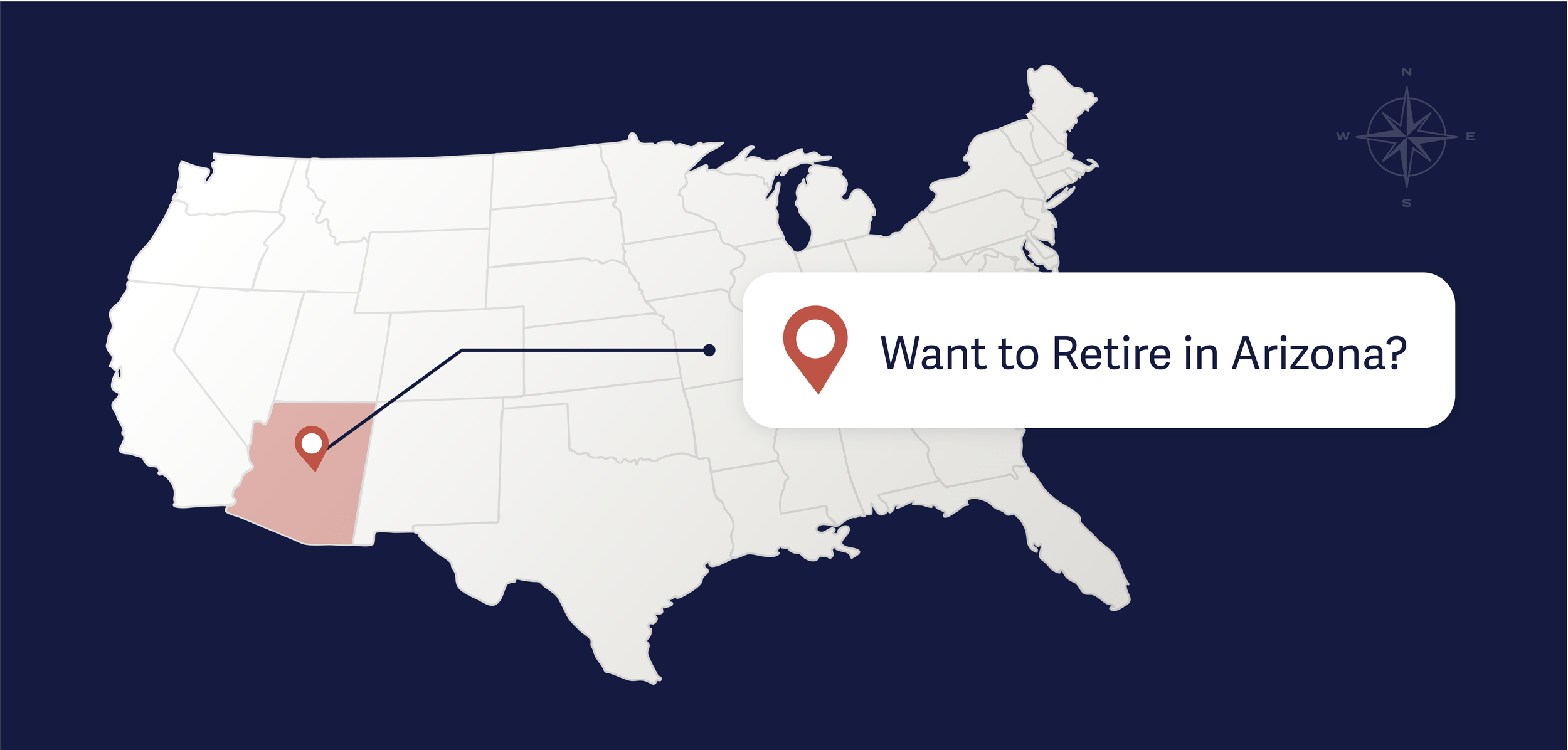
If retirement is on your horizon, one of the most significant decisions you may soon contemplate is where to spend your golden years. Perhaps you want to remain in the same house or downsize but stay close to friends and family in familiar environs. Alternatively, you may want to relocate to a different state—perhaps to a dream destination like Florida, Arizona, North Carolina, or South Carolina, all popular retirement spots.
Either way, selecting the right location for your needs will likely significantly impact how much joy (or regret) you’ll have in retirement. Here are some actionable tips to help you narrow down your retirement destination options.
Key Takeaways
- Where you retire can matter as much as how much you've saved — taxes, housing, and healthcare costs vary widely by state.
- The average retiree household spent about $61,432 in 2024 (~$5,100 a month) per BLS data, but your costs depend heavily on location.
- Only eight states still tax Social Security in 2026; 42 states plus D.C. don't — one of many tax differences worth weighing.
- Housing (~36% of spending) and healthcare are the biggest location-driven costs; plan for aging in place and home insurance too.
- Florida, Arizona, North Carolina, and South Carolina rank among the most popular retirement states for climate, cost, and tax friendliness.
Determine your budget
Whether you have $1 million or $100,000 saved for retirement, your primary objective is to not outlive your savings. It’s therefore essential to determine how much you need to live within your means with your preferred quality of life in mind. Performing this exercise will also provide realistic expectations regarding the retirement lifestyle you can afford and likely help narrow your options.
As for a baseline regarding average retiree household spending, look no further than the Bureau of Labor Statistics (BLS); their most recent data claims retiree households (led by someone age 65 or older) spent $61,432 in 2024.
While location and other considerations—some of which we’ll get into shortly—of course play a part here, this at least provides a general idea of what to expect. Remember that the further away you are from retirement, however, the higher your number will be. For example, average annual spending for retiree households rang in at a (much lower) $50,220 in 2019.
Align with your spouse
While you may prioritize living close to friends and family, your significant other may want to relocate to warmer environs (perhaps on or near a golf course) during retirement. If you’re like most married couples, you’ll likely encounter a few differing opinions in this respect—and that’s okay. Sitting down with your partner to engage in insightful conversations about how you envision your retired life is a great start to help resolve any discrepancies. Staying open and honest about your expectations and finding common ground are paramount to narrowing down your search with your spouse.
Research and explore different retirement locations
| State | How it taxes retirees | Guide |
|---|---|---|
| Florida | No state income tax — Social Security, pensions, and retirement withdrawals are all untaxed. | Retiring in Florida |
| Arizona | Flat 2.5% income tax; Social Security is not taxed. | Retiring in Arizona |
| North Carolina | Flat 3.99% income tax (2026); Social Security is not taxed. | Retiring in North Carolina |
| South Carolina | Social Security is not taxed, plus a sizable retirement-income deduction for those 65+. | Retiring in South Carolina |
In many ways, researching and spending time in prospective locations is a lot like online dating; you continue “swiping” (researching) various “profiles” (destinations) in the hope of eventually finding “the one.” However, as many options will likely boast several key qualities you’re looking for—at least on paper—you won’t know for sure until you meet them (by visiting) and spend time with them (by staying a while) to identify if they’re a “keeper.”
U.S. News & World Report publishes an annual “Best Places to Retire” study based on various factors including taxes, affordable housing, happiness ratings, and desirability. This website is often a great place to begin if you’re unsure about where to live during retirement. You unfortunately won’t find all the information you need there, however, so you’ll need to separately research many other big-ticket items including:
Taxes
The state where you choose to reside can have significant tax implications during retirement. For example, if you own various tax-deferred investments such as a 401(k), traditional IRA, or pension, states can (and many will) charge taxes on your distributions.
As of 2026, eight states (Colorado, Connecticut, Minnesota, Montana, New Mexico, Rhode Island, Utah, and Vermont) still tax Social Security benefits to some degree — though most apply income thresholds, so many retirees there owe nothing.
Retiring from a high-tax state like New Jersey? We weigh the specific trade-offs in Should You Retire Outside of New Jersey?
The point here is that every dollar counts in retirement, especially if you’re living on a fixed income, and you’ll therefore want to be aware of just how much the government will pluck from your hard-earned retirement money.
Housing costs
According to a recent U.S. Bureau of Labor Statistics consumer expenditure survey, housing is by far the largest expense for retirees. In fact, the average retiree household spends an average of $22,193 per year ($1,849 per month) on housing expenses, representing over 36% of their annual expenditures. If you’re on a budget and want to fully enjoy retirement, minimizing your home expenses is an excellent place to start.
When you’re searching for a new home, remember that most aren’t designed with old age in mind; if you’ll eventually require wheelchair accessibility, need to expand a bathroom, and/or convert existing space so all key areas are on one level, expenses can quickly pile up. Even a brand-new home isn’t immune to unexpected accidents and weather damage that homeowner’s insurance may not cover.
For many of you—especially if you’re hoping proceeds from your home sale will fund a chunk of your retirement—downsizing or moving out of state are sometimes your best options.
Healthcare expenses
Healthcare—which includes health insurance, medical services, supplies, and drugs—ranks fourth on the “biggest expenses” list for retiree households, who spend an average of $7,779 annually ($648 monthly). Health insurance premiums comprise the bulk of this cost. While traditional Medicare coverage costs the same everywhere, other expenses—such as prescription coverage and supplemental plans—can vary by state.
While cost is one consideration, of course, healthcare quality is another. WalletHub recently analyzed all 50 states to determine where Americans receive the best and worst healthcare based on cost, accessibility, and outcome. This article is certainly worth checking out.
Public transportation
As you age, you may find yourself relying more on public transportation than you did in the past; a recent Maryland School of Medicine study revealed that 1 in 10 seniors who live in cities rely on public transportation for healthcare access and that transportation barriers are a leading cause of missed appointments among seniors.
Therefore, when narrowing your search, assess how easy it is (or isn’t) to get around without a car. Some communities in fact provide low-cost transportation services for seniors or offer reliable bus/train service that is often less expensive than taxis or ride-sharing companies such as Uber or Lyft.
Amenities
Your initial thoughts about where to retire may immediately drift to golf courses, fitness centers, and ski resorts; and that’s fine! After all, you’ll need to figure out how to fill up all that free time you’re about to enjoy. However, it’s best to also consider other amenities such as the local economy and education (should your financial situation change and you need to work) and environments (e.g., a clubhouse or gathering space) that foster interaction with other residents. This is ever so important as several studies show a healthy social life can improve mental and physical health outcomes.
Home insurance and climate risk
Where you retire increasingly affects what you'll pay to protect your home. Premiums have climbed sharply in states exposed to hurricanes, wildfires, and flooding — Florida, Louisiana, and parts of California among them — and some insurers have pulled out of those markets entirely. Before committing to a location, get a real insurance quote for the specific home and factor storm, flood, and wildfire risk into your budget, since in higher-risk areas these costs can rival property taxes.
In sum: choosing where to live during retirement
Selecting a place to live during retirement is a big decision and thus shouldn’t be rushed. With this in mind, spend as much time as possible (perhaps even years!) researching and visiting potential locations to get a clearer picture of what retired life may look like there. Just remember that no location fits every dream perfectly. Where you live is just one piece of a well-planned retirement.
Want to make sure you get the most out of your retirement? Schedule a FREE Discovery call with one of our CFP® professionals.
Reviewed for accuracy
Paul Muller, AEP®, CFP®
Founder and Relationship Manager at Vision Retirement, with 30+ years in the financial industry.
Read full bio →FAQs
-
Start with your budget, then weigh state taxes, housing and healthcare costs, access to quality healthcare and transportation, proximity to family, home insurance and climate risk, and the amenities that fit your lifestyle. Visit a place — ideally more than once — before committing.
-
In 2026, 42 states plus Washington, D.C. don't tax Social Security benefits. Only eight do — Colorado, Connecticut, Minnesota, Montana, New Mexico, Rhode Island, Utah, and Vermont — and most of those apply income limits, so many retirees still owe nothing.
-
Florida, Arizona, North Carolina, and South Carolina are consistently among the most popular, thanks to their climate, cost of living, and favorable tax treatment of retirees.
-
About $61,432 in 2024 — roughly $5,100 a month — according to the latest Bureau of Labor Statistics data, though your actual costs depend heavily on where you live.


Disclosures:
This document is a summary only and is not intended to provide specific advice or recommendations for any individual or business.